Tag: vienna

  • Kırmızı şemsiye

    English version

    Версия на Български

    Viyana o gün yağmurla erimiş gibiydi — yumuşak, sürekli, sonsuz bir yağmur. Renkler yavaşça soluyor, sokaklar gri bir sessizliğe bürünüyordu. Ben yönsüzce yürürken bir hikâye geldi aklıma; İstanbul’da duymuştum adını: Kırmızı Şemsiye. Ve o gri sokakta, hatırlamak için en doğru hikâyeydi bu.

    Yağmur, ince ince değil,sanki bir şiir gibi yağıyordu. Sokaklarda insanlar şemsiye altlarında birer gölgeye dönüşmüş, aceleyle adımlarını atıyordu. Oysa Sezen, kaldırım taşlarının arasına dolan su birikintilerinde kendi yansımasını arıyordu. Elinde tuttuğu kırmızı şemsiye, bu gri dünyaya açılmış tek kapı gibiydi.

    Bir anda yağmur durdu ya da Sezen durdu, çünkü zaman tuhaf bir şekilde eğilmiş gibi hissetti. Karşısındaki vitrinde bir kelime gördü “unutuş”. Hangi dükkan, hangi vitrin “unutuş” satar ki, diye aklından geçirdi..Gözlerini kırptığında vitrinde yazı değişti “An” oldu. Sezen içeri girdi. Dükkan bomboştu ama içerisi sıcak bir hikaye gibi kokuyordu. Raflarda küçük kutular vardı.”Çocukluk”, “Kayıp arkadaşlar”, “Rüyalar”…Bir kutuyu eline aldı “Yarından hatıralar”. Kutunun kapağını açtığında bir tüy hafifçe havalandı,”Buradan bir şey almak bedava ama karşılığında bir şey bırakmanız gerekir” dedi arkasından bir ses. Döndüğünde kimseyi görmedi. Sezen cebinden bir taş çıkardı. Sahilde bulduğu, üzerinde dalgaların izlerini taşıyan küçük bir taş. Taşı bir rafa bıraktı ve kutuyu aldı.

    Sokağa çıktığında kırmızı şemsiyesi yok olmuştu. Ellerinde “Yarından hatıralar” kutusu vardı ve içindeki tüy bir kuş gibi kanat çırpıyordu.

    Yağmur yeniden başlamıştı. Sokakta insanlar yalnızca şemsiyesiz bir kadının mutlu kahkahasını duyuyorlardı.

    O hikâye, yağmur durduktan sonra bile aklımdan çıkmadı.
    Belki de her yolculuk, kendi küçük anlar dükkânıdır — bazılarını yanımıza alırız, bazılarını geride bırakırız.
    Ve eğer şanslıysak, biraz hafiflemiş bir kalple yürürüz…
    Yarın’a taşıyacak kadar hatırayla.
  • The Autumn Table: Lunchtime at Gmoa Keller

    Türkçe orijinal versiyon

    Vienna in November has a kind of quiet majesty — the air crisp, the light subdued, the city wrapped in a golden melancholy. The chestnut trees along the Ringstraße have shed most of their leaves, and in the soft chill of early afternoon, the promise of something warm and comforting feels almost sacred.

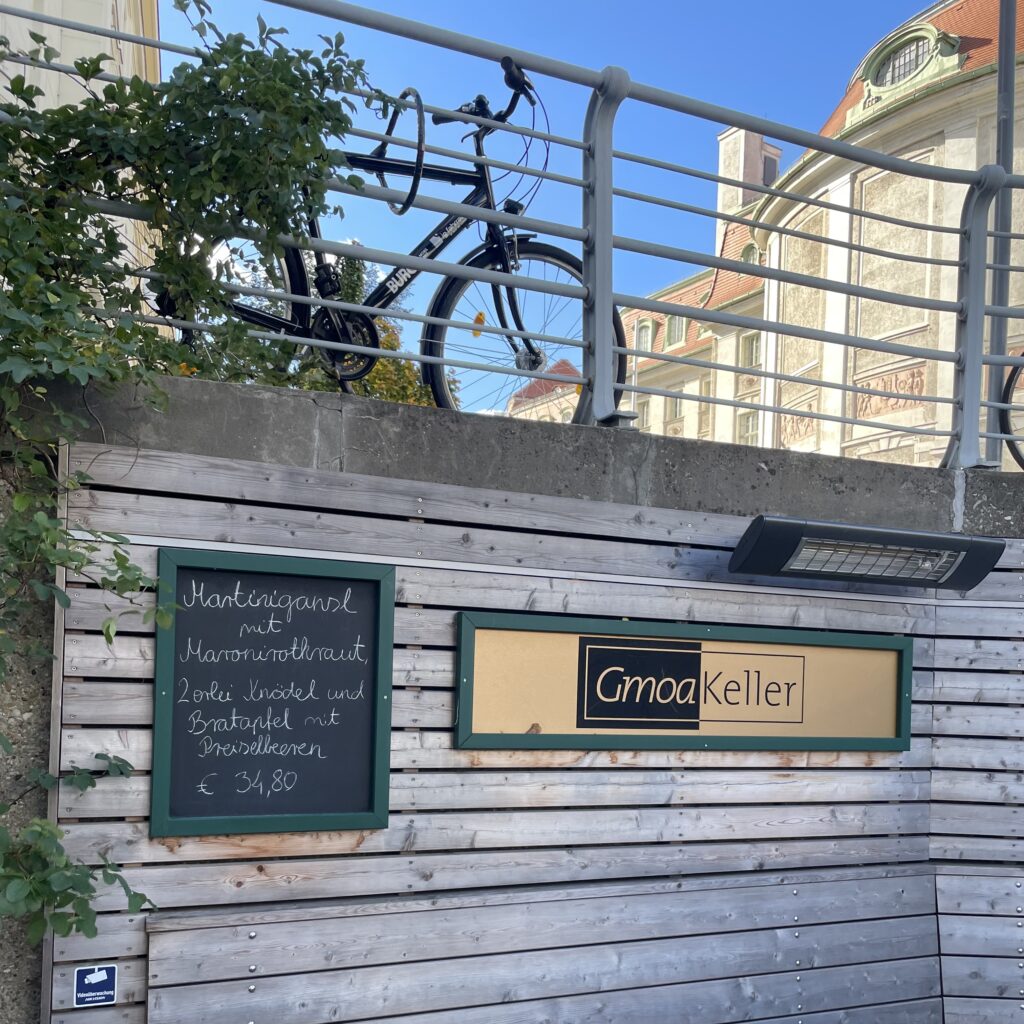
    That’s how we found ourselves stepping down the stone stairs into Gmoa Keller, one of Vienna’s old dining institutions tucked just off the Stadtpark. The name Gmoa comes from “Gemeinde” — meaning “community” — and this restaurant has always lived up to that spirit: a gathering place, a cellar full of voices and laughter, where the air hums with the simple pleasure of food shared in good company.

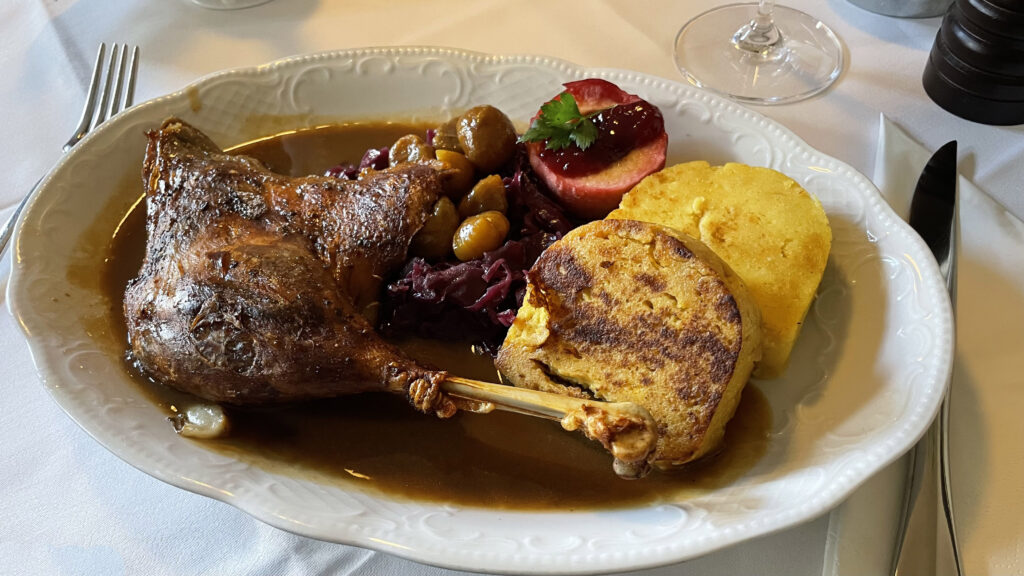
    Today’s meal was no ordinary lunch, but a celebration of a centuries-old tradition — the Martinigansl, or St. Martin’s goose. Each November, around St. Martin’s Day, Viennese tables are graced with this dish: a roast goose, its skin perfectly crisped to bronze, resting beside red cabbage, chestnut stuffing, and a spoonful of apple compote that tastes of autumn itself. It’s one of those meals that feels less like eating and more like participating in a quiet ritual of continuity.

    The story goes back to St. Martin of Tours, a humble man who, when the people wished to make him a bishop, tried to hide in a goose pen to avoid the honor. But the geese betrayed him with their loud cackling — and so, legend says, every year around November 11th, the tables of Central Europe remember both the saint and the birds with a feast. Over time, the Martinigansl became a symbol not only of piety but of the harvest, of giving thanks before the onset of winter.

    At Gmoa Keller, the goose arrives with quiet ceremony: the plate steaming, the aroma deep and inviting. The waiter places it gently before us — the sort of gesture that suggests reverence more than service. The first bite is everything Vienna does best: rich, balanced, and unhurried. The red cabbage carries a sweet whisper of cloves; the dumplings soak up the dark, glossy sauce; and each mouthful feels like an echo of generations who have sat at tables just like this one.

    There’s something about dining in Vienna that always feels like time itself slows down. Maybe it’s the way the wooden walls of old restaurants hold the warmth of countless evenings, or how conversations here seem to rise and fall like chamber music. Around us, the murmur of German, English, and Italian blends into a soft urban symphony. Someone orders another glass of Grüner Veltliner; the waiter nods knowingly.

    And outside, the city goes on in its graceful rhythm — trams rattling past the Opera, the gray sky turning gently toward twilight.

    As we finish the last of the goose, the last sip of wine, I think of how traditions like this one bind a city to its memory. The Martinigansl is more than a meal — it’s a taste of Vienna’s soul: generous, slightly nostalgic, steeped in history yet alive in every bite.

    When we step back out into the cold, the air feels sharper, the city quieter. The scent of roasted chestnuts drifts down the street. And for a fleeting moment, I feel part of the same timeless Vienna that hums softly beneath its surface — the Vienna of stories, of rituals, of warmth against the coming winter.

  • Back to Vienna

    Türkçe orijinal versiyon

    There’s a moment when the plane touches down at Vienna International Airport, a quiet exhale, a sense of returning not just to a place, but to a rhythm. The rhythm of clinking porcelain, the low hum of conversation, the rich perfume of roasted beans curling through the air. After days wandering the lively, chaotic soul of Istanbul — with its swirling bazaars and calls to prayer echoing over the Bosphorus — Vienna feels like slipping back into a familiar dream, one composed of velvet calm and deliberate pauses.

    A few hours later, I find myself on Gumpendorferstraße, at phil, a café-bookstore hybrid that feels like the living room of an old friend who happens to have exquisite taste in both coffee and vinyl. Books lean casually against the walls, jazz murmurs softly through the space, and there’s that unmistakable golden Vienna light filtering through the front windows. On the small silver tray before me: a Wiener Melange, a glass of water, a spoon laid just so — the essence of Viennese café culture distilled into a ritual of simple perfection.

    The Melange is more than a coffee; it’s a story in a cup. Legend has it that the drink was born from the city’s long love affair with coffee, which began in the late 17th century after the Ottoman retreat from Vienna. According to one oft-told tale, sacks of unfamiliar dark beans were left behind, and a certain Franz Georg Kolschitzky, who had lived in Istanbul, recognized their worth. He opened Vienna’s first coffeehouse and sweetened the strong brew with milk and honey — a gesture that softened the exotic bitterness into something distinctly Viennese: refined, balanced, and endlessly civil.

    At phil, the Melange arrives with that same old-world grace. The milk foam wears a heart-shaped swirl — a tiny flourish of care — and as I lift the cup, I think of how the city has perfected this art of lingering. In Istanbul, coffee is fortune and fervor, thick as a story told by a grandmother. In Vienna, it’s introspection — a slow, elegant pause between thoughts. Here, one doesn’t drink coffee so much as inhabit it.

    The contrast between the two cities lingers on my tongue: the spice of Turkish coffee, gritty and bold, against the velvet gentleness of the Melange. One is a declaration; the other, a sigh. Yet both share an understanding that coffee is not a beverage but a mirror — reflecting the culture that brews it.

    Around me, Vienna hums softly through the café’s window: cyclists gliding down narrow streets, the sound of church bells blending with the faint rattle of a tram. I sip, and time folds in on itself. Maybe it’s the caffeine, maybe it’s nostalgia, but I feel that peculiar Viennese melancholy the locals call Wiener Schmäh — a sweetness tinged with sadness, the poetry of returning and knowing you’ve changed.

    I finish the Melange slowly, letting the last warmth fade on my tongue. The glass of water beside it, clear and bright, is a quiet nod to the old coffeehouse etiquette — a small courtesy reminding you to linger a little longer, to think, to write, to simply be.

    Back in Vienna, everything feels both eternal and ephemeral — like the foam heart dissolving into the coffee below it. And as I set down the empty cup, I realize that this city, with its patient rituals and gentle tempo, is the perfect place to begin again.